

The rapid developments in fiber laser technologies and the increased demand of high-power fiber laser component fabrication has…

Fitel present our newest addition to the S185 series. The S185EDV employs an End View system designed for splicing fiber with…
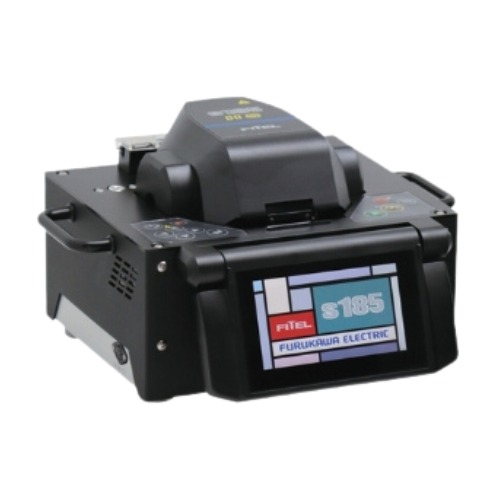
The FITEL S185HS High-end Fusion Splicers are designed for high strength fusion splicing of standard and specialty fibers for factory, manufacturing..
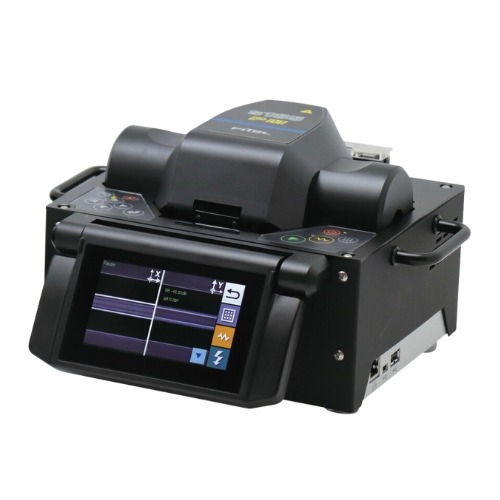
The FITEL S185PM High-end Fusion Splicers are designed for high strength fusion splicing of standard and specialty fibers for factory…

The FITEL S185LDF High-end Fusion Splicers are designed for splicing standard diameter 80um up to 500μm cladding fiber with low..

The FITEL S185LDF High-end Fusion Splicers are designed for splicing standard diameter 80um up to 500μm cladding fiber with low..

Though the main body is the same compact design of the S185 series, Ring of Fire models equip the powerful arc-discharging with three..

Though the main body is the same compact design of the S185 series, Ring of Fire models equip the powerful arc-discharging with three…

With a proven chassis design, the FITEL S154-AC Hand-Held Fusion Splicer provides a robust, fast, and reliable splicing solution for FTTx…

The FITEL S179 Hand-Held, Core Alignment Fusion Splicer offers powerful performance, delivering fast and reliable optical fiber splicing…

The FITEL S124X is our most adaptable ribbon fusion splicer fit for any application. This splicer does it all: Both 250 μm and 200 μm pitch…
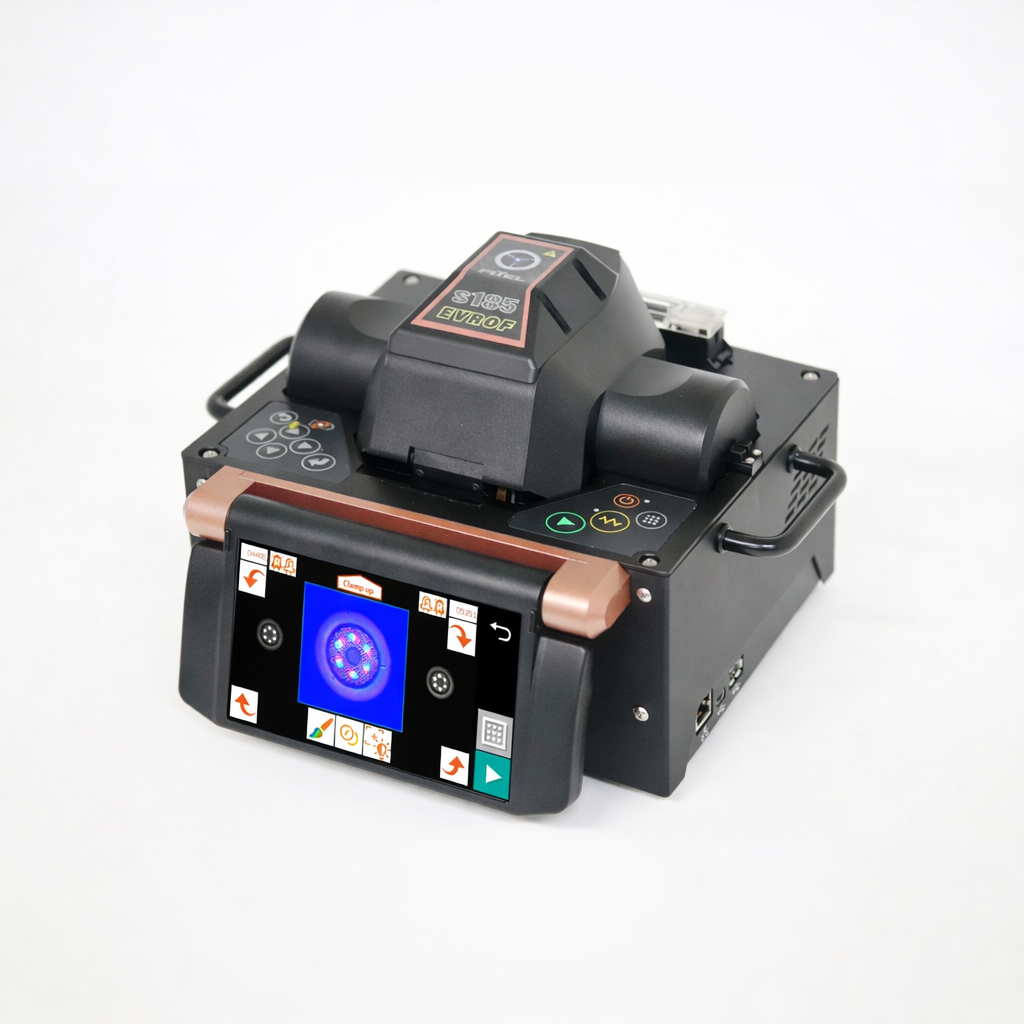
Splice hollow-core, multi-core, and specialty fibers with precision. The FITEL S185EVROF delivers uniform heating, advanced imaging, and low-loss performance.
Fusion Splicers for Precision Fiber Optic Work
Fusion splicers permanently join optical fibers using a controlled electric arc. The result is a low-loss, high-strength splice that actually holds up in the real world. Mechanical splicing can’t match it. Not on performance. Not on reliability.
In advanced manufacturing and research environments, fiber optic fusion splicers sit at the center of the process. They keep optical performance consistent. They keep assemblies stable. They prevent problems from surfacing downstream.
At Vero Photonics, fusion splicing equipment is built for applications that move past standard telecom assumptions. These systems come into play when fiber geometry changes, diameters grow, or alignment tolerances tighten. At that point, active control stops being optional. Fixed alignment stops working. Full stop.
What Fusion Splicers Are Used For
Fusion splicers show up where the margin for error disappears.
You’ll find them in fiber optic laser manufacturing. Medical device production. Aerospace and defense programs. Research labs where repeatability matters more than speed.
Common use cases include:
- Permanent fusion splicing with minimal insertion loss
- Alignment-critical work on polarization-maintaining fiber
- Large-diameter fiber splicing for power delivery and sensing
- Ribbon fiber assemblies
- End-cap and angle-critical splicing in high-power systems
In practice, fusion splicing is rarely a standalone task. It lives inside a workflow. Fiber prep comes first. Inspection comes later. Validation closes the loop. That’s how consistent results actually happen.
Standard Fusion Splicers vs Specialty Fusion Splicers
Standard fusion splicers work well when fibers behave predictably. Uniform diameters. Familiar coatings. Telecom-friendly geometries.
That comfort zone disappears quickly.
Specialty fusion splicers are built for cases like:
- Large-diameter fibers that exceed telecom norms
- Polarization-maintaining and specialty glass fibers
- High-strength or coated fibers
- Ribbon fiber configurations
- Angle-sensitive or end-view alignment applications
In these scenarios, active alignment isn’t a premium feature. It’s the baseline requirement for a usable splice.
FITEL Fusion Splicers for Advanced Applications
As a North American distributor for FITEL fusion splicers, Vero supports fiber splicing work where precision and repeatability directly affect system performance.
The FITEL S185EDV fusion splicer is commonly used for end-view alignment and angle-critical splicing. The FITEL S179 fits compact, active-alignment workflows where flexibility matters.
For mechanically demanding environments, high-strength and large-diameter fiber applications rely on systems like the FITEL S185HS and FITEL S185LDF.
Each of these tools exists for a specific reason. None of them try to be everything. That focus is the advantage.
Fusion Splicing Systems Beyond the Benchtop
Some fusion splicing applications push past what a standalone splicer can handle.
Angle-critical and high-precision workflows often require system-level control. Multi-axis alignment. Automated XYZ positioning. Tight tolerance management that stays tight over time.
This is where solutions like the 3SAE PentaPod® multi-axis positioner come into play. These systems show up in end-cap splicing, beam delivery fiber preparation, and applications where alignment tolerances approach zero and stay there.
At this level, fusion splicing intersects with advanced glass processing, geometry control through fiber optic tapering, and dedicated taper manufacturing stations.
Complete Fusion Splicing Workflows
Fusion splicers deliver consistent results when they’re part of a controlled workflow. That usually starts with proper fiber preparation. Stable alignment using dedicated fiber holders. Clean stripping with thermal stripping and ultrasonic cleaning systems for high-strength fiber. Precision cleaving using tools like the NorthLab ProCleave HS. Interferometric inspection tools like the Northlab ProView LD verify cleave quality before fusion splicing.
After the splice, recoating systems such as the Northlab ProCoater restore mechanical protection. To further optimize production, FiberBank is a free service offered to S185 and S179 owners. It provides a comprehensive fusion splicing recipe database and an interface to request custom splice recipes. By leveraging the combined expertise of Vero and FITEL, this service streamlines the transition from concept to production, ensuring maximum repeatability and minimal process variation.
Selecting the Right Fusion Splicer
Choosing a fusion splicer isn’t about feature checklists.It’s about constraints.Fiber type. Cladding diameter. Alignment tolerance. Production volume. Those variables decide what works and what fails. Everything else is noise.Vero works directly with customers to align fusion splicing equipment to real-world requirements. Practical outcomes beat theoretical specs every time. If you need to pressure-test an approach or validate a process, talking with an engineer early saves time later.FAQs About Fusion Splicers
What is a fusion splicer?
A fusion splicer permanently joins optical fibers by aligning them precisely and applying a controlled electric arc to fuse the glass. The result is a low-loss, high-strength connection used in manufacturing, research, and high-performance fiber optic systems.
When do you need a specialty fusion splicer?
You need a specialty fusion splicer when working with non-standard fibers. That includes large-diameter fiber, polarization-maintaining fiber, ribbon fiber, or angle-critical applications where fixed alignment can’t deliver reliable results.
What fiber types require high-precision alignment?
High-precision alignment is typically required for polarization-maintaining fiber, specialty glass fibers, large-diameter fibers, and applications where optical mode alignment directly affects system performance.
Do fusion splicers work with high-power fiber lasers?
Yes. Specialty fusion splicers are widely used for manufacturing high-power fiber laser systems, including beam delivery fibers and end-cap splicing where alignment accuracy and mechanical strength matter.
Can Vero help select the right fusion splicer?
Yes. Vero provides application-driven guidance to help match fusion splicers to fiber type, process requirements, and production goals.